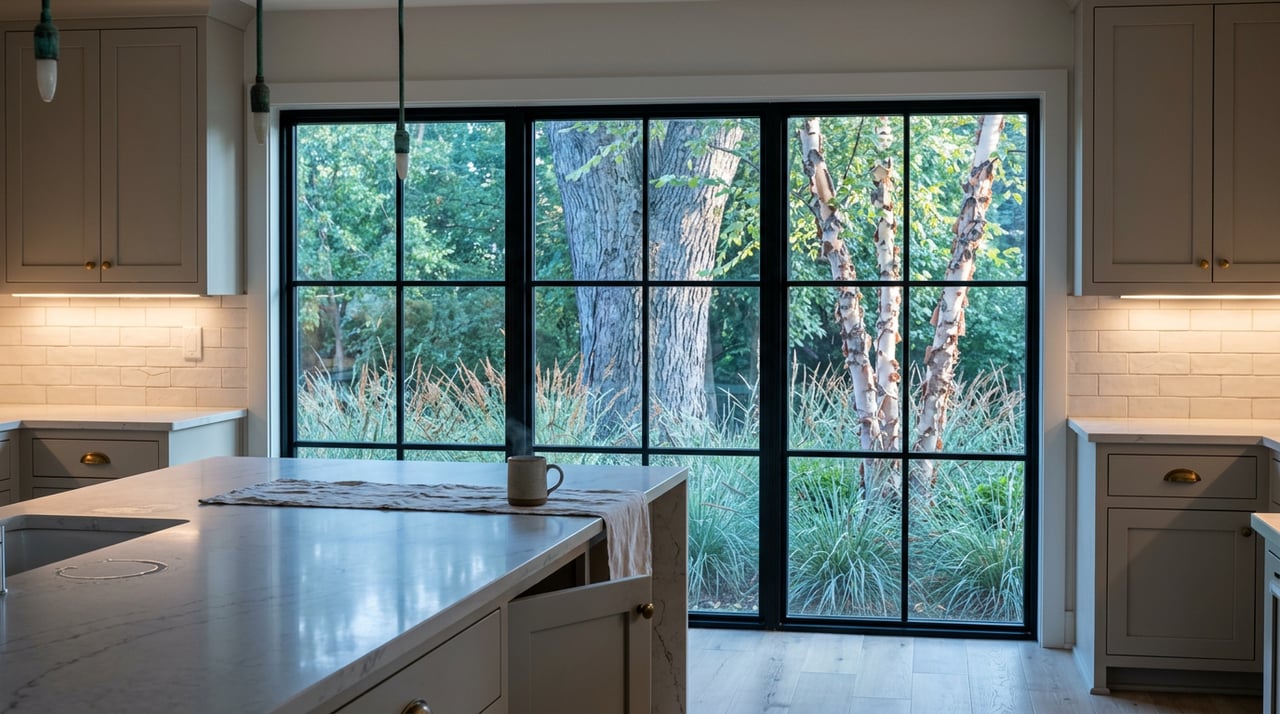
Two showings, same week, same stretch of Wayzata Bay, same asking price within a few thousand dollars of each other. Both listing sheets used the word "dock." One buyer walked away from the table forty-five days later with a boat in the water by Memorial Day. The other is still waiting on paperwork that has nothing to do with the roof, the furnace, or the inspection report.
The difference was never the house. It was what "dock" actually meant on each parcel, and whether anyone had checked before the offer went in.
Lakefront Is A Real Estate Term. Dock Rights Are A Legal One
Owning shoreline on Lake Minnetonka gives a property owner the right to apply for a dock. It does not hand over an automatic dock, a guaranteed slip count, or permission to build whatever the previous owner had. That application goes to the Lake Minnetonka Conservation District, a body created by the Minnesota Legislature and governed by a board with one appointee from each of the 14 municipalities that border the lake, including Wayzata. The LMCD's own language describes its job as working to help protect the lake, public safety, and the environment, with a mission to preserve and enhance the Lake Minnetonka experience so it continues to be an attractive place to live, do business, and recreate.
That is a lake-wide regulatory mission, not a house-by-house guarantee. And the LMCD is only one of several agencies with a say. The Minnehaha Creek Watershed District, which handles a wide range of land use permitting around the lake, is explicit that it does not issue permits for docks in Lake Minnetonka and directs residents to contact the Lake Minnetonka Conservation District instead. The Minnesota DNR sets its own statewide threshold for when a dock needs any permit at all, based on width, length, and whether the structure creates a navigation hazard. Three agencies, three sets of rules, one word on the listing sheet.
The Line Nobody Points To During A Showing
Every dock measurement on Lake Minnetonka traces back to one number: 929.4 feet, the lake's ordinary high water level. Dock length, setbacks, and watercraft storage areas are all measured from that line, and the LMCD's own guidance notes that water depths vary significantly in bays and even within the same bay, and they also vary depending on the time of year and amount of precipitation. A dock that reaches comfortable depth in June can sit in mud by October. The district's own materials point out that water levels in the fall could be 12 inches below the OHW level, and that if a dock is not used over time, sediment may accumulate in the location.
A showing scheduled for a warm Saturday in July tells a buyer almost nothing about how that same shoreline behaves in September. It is one of the few property features in Wayzata that changes meaning by season, and the listing photos are taken in the season that flatters it most.
Older Docks Play By Older Rules
Lake Minnetonka has roughly 4,000 residential and commercial properties on its shoreline, and a meaningful share of them were platted or built long before the current code existed. As the largest lake in the Twin Cities and the ninth largest in Minnesota, it is one of the state's most treasured natural resources, with around 4,000 residential and commercial properties on its shores. The LMCD code sets a hard limit on platform size: docks, decks, and platforms may not exceed 8 feet in both length and width at once, for example 8 by 12 feet is allowed, but 9 by 12 feet is not.
A dock built decades ago under a different rulebook can still be lawfully in place today under a grandfathered status. What it cannot do is expand, rebuild, or change configuration and assume that older status carries over. When it does not, the fix runs through the LMCD's variance process, which the district describes as a request to deviate from one or more requirements of the Code, available as a limited tool for unique situations where strict application of the Code creates practical difficulties based on conditions specific to the property, under Section 6-5.01.
A real case from the LMCD's own files shows how this plays out. At 435 Lakeview Avenue in Tonka Bay, a proposed dock platform ran into exactly this wall. LMCD staff found that the proposed platform did not appear to meet standard code requirements for dock dimensions because it exceeded 8 feet in both length and width, and staff recommended at minimum that the platform be reduced to comply. The applicant had also requested two boat storage units, or BSUs, the term the district uses for the space where a single watercraft is stored alongside a dock. The property owner, the applicant, and the city had already been discussing arrangements for that single dock for two years by the time the file reached this stage. That is not a Wayzata example specifically, but it is a Lake Minnetonka example, and the code that produced it applies to every bay on the lake, Wayzata included.
What A Permit Actually Costs You In Time
Here is the number that should change how a buyer or seller plans a Wayzata closing. According to the LMCD's own published permitting guidelines, the application process typically takes 60 to 120 days depending on the complexity of the project, minor changes eligible for administrative review generally take 30 to 60 days, and applicants should anticipate up to 15 working days just to learn whether an application is complete or needs more information before review even begins.
A typical Minnesota residential closing runs 30 to 45 days from accepted offer to keys in hand. A dock permit, in the best case, takes about as long as that entire closing all over again, and in a more typical case, it takes two to three times longer. None of that clock starts until after the sale closes and the paperwork is in the new owner's name. A buyer who assumes they can simply fix a nonconforming dock after moving in is planning around a summer that has already happened by the time the permit clears.
The Wake Rule Changed The Math For Everyone Nearby
Dock rights are not the only piece of paperwork that shifted recently. In May 2026, the LMCD gave the Shorewood City Council an update confirming that enforcement of a rule passed a few years earlier is now a settled part of how the lake operates. The Lake Minnetonka Conservation District has been working closely with the Hennepin County Sheriff's Water Patrol since the passage of a 2023 rule requiring all watercraft to maintain a minimum distance of 300 feet from all shorelines and 150 feet from all structures, parked watercraft, and swimmers. Along with the 300-foot rule, the LMCD passed a new watercraft speed limit of 5 mph for all craft within 300 feet of shore.
The enforcement pattern so far has favored education over citations. A Water Patrol representative told the council that "there were no tickets issued within the 300-foot ordinance range for creating waves" for wake boats in 2025, even as stops for both educational and enforcement purposes continued. For a shoreline buyer, this matters less as a legal risk and more as a lived reality: the quiet water a listing photo promises is now a distance rule the whole lake is learning to observe together, not an assumption.
Reading The Market Correctly
Citywide numbers for Wayzata are not built for this segment. As of early August 2026, there were 11 homes for sale in Wayzata specifically listed with dock access, carrying a median list price of $2.12 million, while roughly 13 homes across the entire city had sold in the trailing month. That is a market thin enough that a single grandfathered configuration, a single BSU allocation, or a single open LMCD file can move a price more than a finished basement would. Frontage and dock rights price the property. The house is what sits on top of them.
Before You Write Or Accept An Offer
- Request the LMCD permit history for the specific parcel, not just the city's building file
- Confirm whether the dock configuration predates the current code and what that grandfathered status does and does not allow
- Get a current survey showing setback and length measurements from the 929.4 foot OHW line
- Ask directly whether any BSU allocation or slip right is being transferred with the sale, in writing
- If the dock is shared through an association, review the HOA documents for transfer rules before assuming access carries over automatically
None of this replaces a home inspection. It runs alongside it, and for shoreline property it often matters more to the closing date.
FAQ
If a Wayzata home is advertised as lakefront, does that guarantee dock rights? No. Owning shoreline gives the right to apply for a dock through the LMCD. It does not guarantee a specific dock, slip count, or configuration. That is confirmed through permit history and survey, not the listing description.
How long should a buyer budget to change or expand a dock after closing? Plan for 60 to 120 days for a typical project and 30 to 60 days for minor administrative changes, based on the LMCD's own published timeline, plus up to 15 working days just to find out if the application is complete. That clock starts after closing, not before.
Why do two lakefront listings in the same bay sometimes carry very different prices? Dock configuration, grandfathered watercraft counts, and slip or BSU rights move price independent of square footage. Because the LMCD, the watershed district, and the DNR each regulate a different piece of shoreline activity, one property's paperwork can be clean while a near-identical neighbor's is still open with the district.
Shoreline property on Lake Minnetonka in Wayzata rewards the buyer or seller who checks the paperwork before falling in love with the view. If you are weighing a purchase or a listing on Wayzata Bay or anywhere else along the lake, Farida Karundeng can help you read the dock file the same way she reads the comps, before it becomes the reason a closing slips. Let's Connect.